Collection
Doors
The largest thing the shop builds, the first thing anyone sees, and the only piece in the catalog that can be asked to stop something.
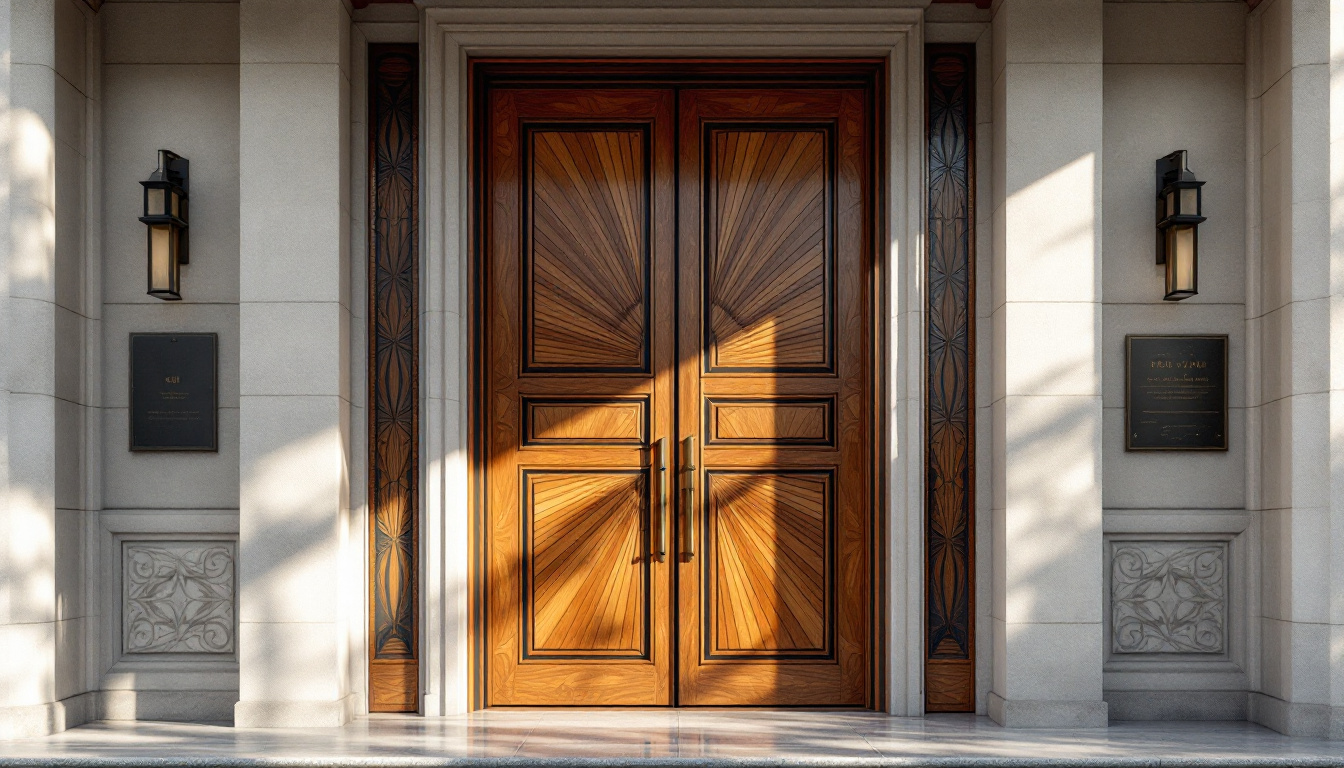
Commissioned individually
A front door is the only piece of furniture a house shows to strangers.
Doors are built one at a time to an opening, in quartersawn white oak, walnut, or a species chosen for the building. Panels are grain-matched across the face so the figure runs continuously from top to bottom rather than restarting at every rail.
Relief is cut on the CNC and finished by hand — the machine gets the geometry exact and repeatable, and the hand gets the edges and the surface right. Both are necessary. Neither is sufficient.
Hardware is brass and minimal. No hinge, screw or plate shows on the face. Where the door is inlaid with resin, it runs the full height as one pour.
Optional · Armored core
Split, machined,
and closed again.
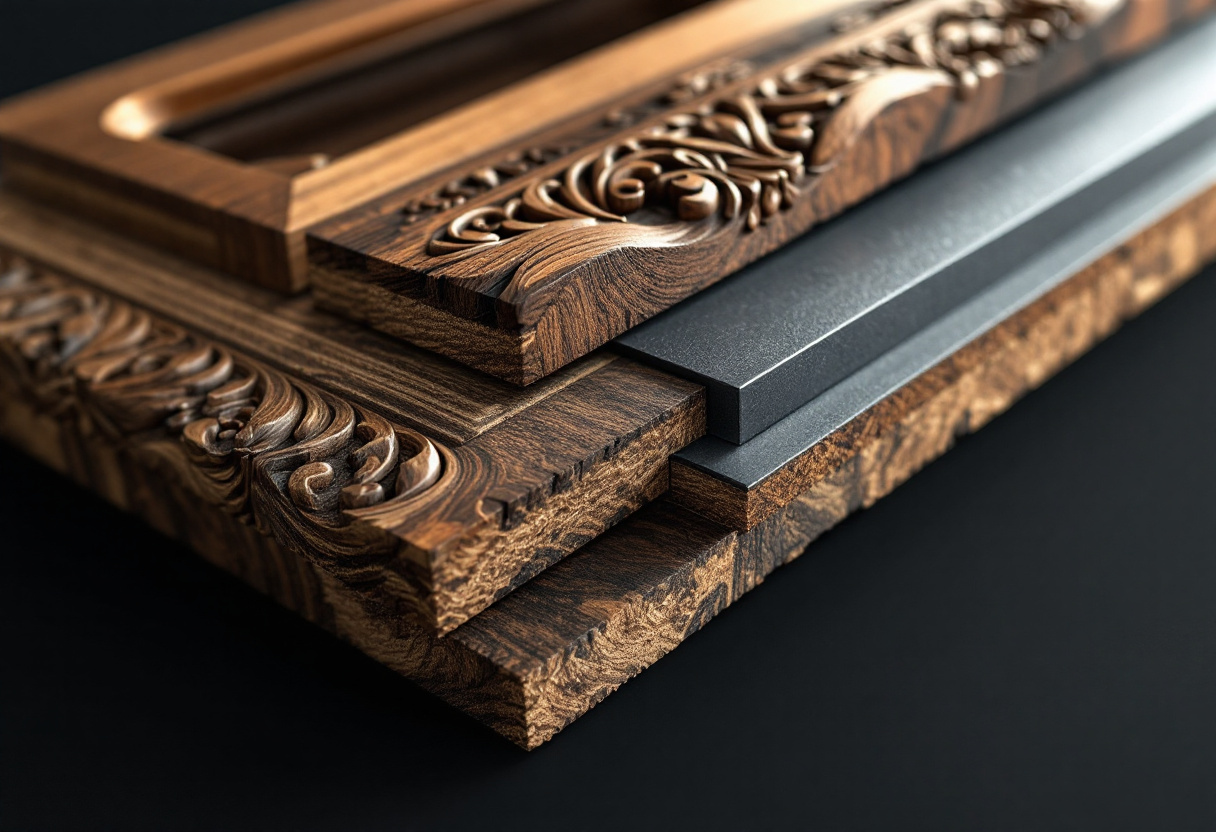
Any door in this collection can be built around a steel core. From the outside there is nothing to see, which is the entire idea.
The door is split vertically down its center line before finishing. Both halves are machined out to accept a steel plate cut to the opening. The plate goes in, the halves are rejoined and clamped, and the seam is closed along the grain so it disappears into the design.
The relief carving is then cut across the reassembled face, so the pattern crosses the joint continuously. There is no line to find, because the pattern that would reveal it was applied afterward.
How an armored door is built
Four operations, in order.
-
Build the door first
The door is made as a door — grain-matched, sized to the opening, dry and stable — before anything is cut into it. A panel built around a plate never moves the way wood expects to.
-
Split and machine
The blank is separated down its vertical center and each half is pocketed on the CNC to the exact footprint of the plate, with clearance for seasonal movement. The cavity is cut, not chiseled, so the plate beds against a flat reference on both faces.
-
Set the core and close
The steel plate is bedded, the halves are brought back together, and the joint is closed along the grain line. Nothing is fastened through the face. The door becomes a single body again.
-
Carve last
Only now is the relief cut, running across the closed joint. The finish goes on over the whole face at once. What arrives at the building is a carved hardwood door, and that is all it looks like.
Specification
Ornate doors
Commissions
Start with the opening.
Tell us the dimensions, the building, and what the door needs to do. We will tell you what is possible, what it costs, and how long it takes — including when the honest answer is that you do not need us.
We read every one and reply in person. Commissions are taken a few at a time, so an early note is worth more than a detailed one — we can work the detail out together.